Grokking the Coding Interview logo
HomeCoursesBlog
Grokking the

Coding Interview: Patterns for Coding Interview

One-stop portal for all your coding interview needs.
Coding Interview
Coding Interview
Coding Patterns
Coding Patterns
Data Structures & Algorithms
Art of Recursion
Art of Recursion
Dynamic Programming
Dynamic Programming

Trusted by developers working in top tech companies like

microsoft
meta
amazon
google
apple
netflix

Preview our most popular courses
Image
Grokking the Coding Interview: Patterns for Coding Questions
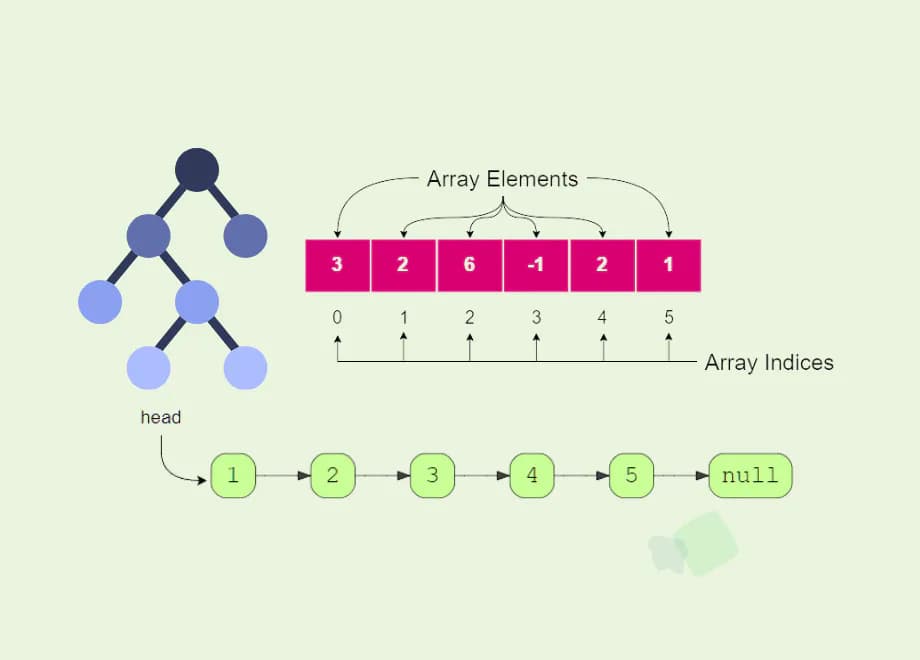
Grokking the Coding Interview: Patterns for Coding Questions" is a comprehensive course that teaches 27 key coding patterns to help candidates map new problems to known solutions, enhancing their problem-solving skills for coding interviews. This course has successfully helped developers secure positions at top tech companies like Google, Facebook, Amazon, and Microsoft.
Image
Grokking Data Structures & Algorithms for Coding Interviews
"Grokking Data Structures for Coding Interviews" is a comprehensive course that teaches the principles, usage, and implementation of essential and advanced data structures, along with their time and space complexities. This course prepares participants to select the most suitable data structures for optimized code performance, helping them excel in coding interviews.
Image
Grokking 75: Top Coding Interview Questions
"Grokking 75 Top Coding Interview Questions" is the ultimate course for mastering the most important and frequently asked coding interview questions, designed specifically to help you excel in technical interviews at top tech companies like FAANG. With pattern-based learning and real interview simulations, this course equips you with the essential skills to confidently tackle any coding challenge.
Your Roadmap to Coding Success
All 42 coding patterns taught in Grokking the Coding Interview
Two Pointers
Two Pointers

Efficient list traversal and manipulation with two initialized pointers.

Preview Lesson
Fast and Slow Pointers

Detects cycles in linked lists using two pointers at different speeds.

Sliding Window
Sliding Window

Uses a sliding window to efficiently find subsets in arrays or strings.

Merge Intervals
Merge Intervals

Efficiently merges overlapping intervals or determines their intersection.

Cyclic Sort
Cyclic Sort

Sorts arrays of numbers from 1 to n in O(n) time complexity.

In-Place Linked List Reversal

Reverses the order of nodes in a linked list in-place.

Stacks
Stacks

Uses a stack for efficient push, pop, and peek with O(1) time complexity.

Monotonic Stack
Monotonic Stack

Utilizes a monotonic stack for efficient problem solving.

Hash Maps
Hash Maps

Employs hash maps for constant-time lookup and insertion.

Level Order Traversal
New
Level Order Traversal

Groups tree nodes by depth to answer questions one level at a time.

Tree Breadth First Search

Traverses trees level by level using a queue data structure.

Tree Depth First Search

Explore trees by traversing each branch as far as possible before backtracking.

Graphs
Graphs

Models relationships through vertices and edges, using BFS, DFS.

Island (Matrix Traversal)

Solves problems of identifying and counting islands in a matrix.

Two Heaps
Two Heaps

Efficiently solves problems related to scheduling and data streams with heaps.

Subsets
Subsets

Generates all possible or specific subsets of a set.

Modified Binary Search

Solves problems with variations on the classic binary search algorithm.

Bitwise XOR
Bitwise XOR

Uses XOR operations to find unique elements and missing/duplicate numbers.

Top K Elements
Top K Elements

Efficiently finds the top K elements in arrays or streams.

K-way Merge
K-way Merge

Merges K sorted arrays or lists efficiently into one sorted array or list in linear time.

Greedy Algorithms
Greedy Algorithms

Uses a greedy approach to find locally optimal solution for a global optimum.

0/1 Knapsack
0/1 Knapsack

Addresses optimization problems where items have values and weights.

Fibonacci Numbers
New
Fibonacci Numbers

Dynamic programming where each state is built from the previous ones.

Palindromic Subsequence
New
Palindromic Subsequence

Dynamic programming across substrings to find palindromic sequences.

Backtracking
Backtracking

Depth-first technique to solve problems by exploring different possibilities.

Trie
Trie

Tree-like data structure for efficient retrieval of key-value pairs or strings.

Topological Sort (graph)

Orders directed graph vertices such that u precedes v for every edge (u, v).

Union Find
Union Find

Data structure tracking elements grouped into disjoint sets.

Ordered Set
Ordered Set

Set maintaining sorted element. Useful for rank and range queries.

Prefix Sum
New
Prefix Sum

Precomputes cumulative totals so any range sum is answered in O(1).

Multi-threaded
Multi-threaded

Uses multiple threads for concurrent tasks, enhancing system performance.

Counting
New
easy
Counting

Tallies how often each value occurs to answer questions in linear time.

Monotonic Queue
New
easy
Monotonic Queue

Keeps a queue in sorted order to read sliding-window extremes in O(1).

Simulation
New
easy
Simulation

Follows the rules of the problem step by step to produce the result.

Linear Sorting Algorithms
New
easy
Linear Sorting Algorithms

Sorts in O(n) using counting, radix, and bucket techniques.

Meet in the Middle
New
medium
Meet in the Middle

Splits the search space in half to cut exponential work down.

Mo's Algorithm
New
medium
Mo's Algorithm

Reorders offline range queries so they can be answered efficiently.

Serialize and Deserialize
New
medium
Serialize and Deserialize

Converts a structure to a string and rebuilds it exactly.

Clone
New
medium
Clone

Creates deep copies of graphs, trees, and linked structures.

Articulation Points and Bridges
New
hard
Articulation Points and Bridges

Finds the vertices and edges whose removal disconnects a graph.

Segment Tree
New
hard
Segment Tree

Tree structure giving fast range queries alongside point updates.

Binary Indexed Tree
New
hard
Binary Indexed Tree

Fenwick tree for prefix sums that stay fast under updates.

Hear from Successful Tech Professionals

Image
Ashley Pean
Software Engineer
Check out Grokking the Coding Interview. Instead of trying out random Algos, they break down the patterns you need to solve them. Helps immensely with retention!
Image
Simon Barker
Software Engineer
This is what I love about http://designgurus.io’s Grokking the coding interview course. They teach patterns rather than solutions.
Image
Roger Cruz
Software Engineer
The world gets better inch by inch when you help someone else. If you haven't tried Grokking The Coding Interview, check it out, it's a great resource!
Image
pikacodes
Software Engineer
I've tried every possible resource (Blind 75, Neetcode, YouTube, Cracking the Coding Interview, Udemy) and idk if it was just the right time or everything finally clicked but everything's been so easy to grasp recently with Grokking the Coding Interview!
Image
Matzuk
Software Engineer
Algorithms can be daunting, but they're less so with the right guide. This course - https://www.designgurus.io/course/grokking-the-coding-interview, is a great starting point. It covers typical problems you might encounter in interviews.
Image
Tonya Sims
Software Engineer
DesignGurus.io "Grokking the Coding Interview". One of the best resources I’ve found for learning the major patterns behind solving coding problems.
Image
MO JAFRI
Software Engineer
The courses which have "grokking" before them, are exceptionally well put together! These courses magically condense 3 years of CS in short bite-size courses and lectures (I have tried System Design, OODI, and Coding patterns). The Grokking courses are godsent, to be honest.
Image
ABHISHEK GUPTA
Software Engineer
My offer from the top tech company would not have been possible without this course. Many thanks!!
Image
KAUSHIK JONNADULA
Software Engineer
Thanks for a great resource! You guys are a lifesaver. I struggled a lot in design interviews, and this course gave me an organized process to handle a design problem. Please keep adding more questions.
Image
AHMET HANIF
Software Engineer
Whoever put this together, you folks are life savers. Thank you :)

All Coding Courses
Image
Grokking the Coding Interview: Patterns for Coding Questions
Image
Grokking Data Structures & Algorithms for Coding Interviews
Image
Grokking 75: Top Coding Interview Questions
Image
Grokking the Art of Recursion for Coding Interviews
Image
Grokking Multithreading and Concurrency for Coding Interviews
Image
Grokking Dynamic Programming Patterns for Coding Interviews
Image
Grokking Meta Coding Interview
Image
Grokking Microsoft Coding Interview
Image
Grokking Amazon Coding Interview
Image
Grokking LinkedIn Coding Interview
Image
Grokking Google Coding Interview
Image
Grokking Oracle Coding Interview

Frequently Asked Questions

Grokking the Coding Interview is a comprehensive interview preparation course that teaches essential coding patterns and problem-solving strategies to help you succeed in technical interviews at top tech companies.
This course is ideal for software engineers, computer science students, and developers preparing for coding interviews at companies like Google, Meta, Amazon, Microsoft, and startups.
The course covers core data structures, algorithms, recursion, dynamic programming, sliding window, two pointers, tree traversal, and system design fundamentals.
Yes, the course starts with the basics and gradually progresses to advanced topics, making it suitable for both beginners and experienced developers who want to strengthen their problem-solving skills.
On average, it takes 6–8 weeks to complete the course if you dedicate 1–2 hours per day. However, the course is self-paced, so you can learn at your own speed.
Yes, a basic understanding of at least one programming language such as Python, Java, JavaScript, or C++ is required to follow along with the coding exercises and solutions.
Some platforms may offer a certificate of completion. However, the true value of the course lies in the skills and confidence you gain to succeed in coding interviews.
Absolutely. The course is designed around the patterns and question types commonly asked at FAANG companies and other top-tier tech firms. Many successful candidates have used it as their primary preparation resource.
Yes, once you enroll, you get lifetime access to the course content, allowing you to revisit the material anytime you need a refresher or are preparing for future interviews.
Refund policies depend on the platform you purchase the course through. Be sure to check their terms and conditions before enrolling.

Recommended Blogs

Longest Common Subsequence: The DP Family Behind Edit Distance
Image
Arslan Ahmad
Longest Common Subsequence: The DP Family Behind Edit Distance
Master the LCS dynamic programming family: the two-line recurrence over two sequences, why the table has an extra row and column, how Edit Distance is the same grid with three choices, the subsequence versus substring difference, and a practice ladder.
One-Stop Portal For Coding Interviews.
Follow us:
Copyright © 2025 Coding Interview All rights reserved.