Insights & Guides
Deep dives into coding patterns, data structures, algorithms, and software engineering interview best practices.

Mock Interview Platforms Compared: DesignGurus.io, interviewing.io, Pramp (Now Aced, Formerly Exponent), and Free Peer Practice
Mock interview platforms side by side: DesignGurus.io, interviewing.io, Pramp (now Aced, formerly Exponent), and free peer practice. Who interviews you, what a session costs, what feedback you get, and which one to use at each stage of preparation.

The LeetCode Daily Schedule: How Many Problems Per Day at 12, 8, and 4 Weeks Out
How many LeetCode problems to do per day, as a table: weeks until the interview down the side, hours per day across, and the pace and pattern coverage in each cell. Plus what one properly solved problem takes, and how the last two weeks change.

Blind 75 Grouped by Pattern: Every Problem Mapped to the Technique That Solves It
All 75 Blind 75 problems in one table, grouped by the coding pattern that solves each one, with the tell that identifies the pattern in the statement, the six Premium-locked problems with free equivalents, and the order to learn the patterns in.
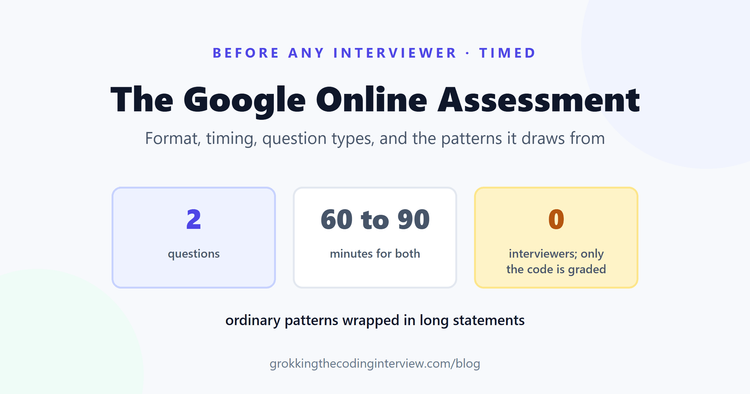
The Google Online Assessment: Format, Timing, Question Types, and the Patterns It Draws From
Google's online assessment on one page: who receives it, the platform, two questions in 60 to 90 minutes, the question types, and the coding patterns behind them. Plus how to prepare in the week before, and what happens after you pass.

LeetCode Premium vs Free: Every Feature Compared, and the Four That Matter for Interviews
Every LeetCode Premium feature against the free tier in one table: company tags, locked problems, editorials, mock assessments, and the rest. The four that change an interview result, the price, and the free setup that covers most of your prep.
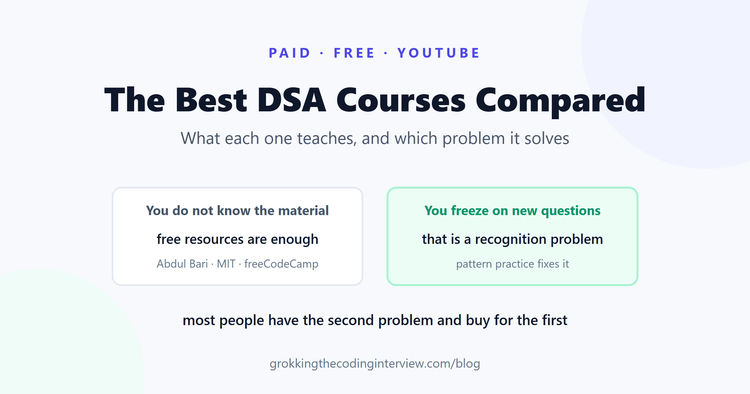
The Best DSA Courses Compared: Paid, Free, and YouTube
A comparison of the best data structures and algorithms courses for coding interviews, covering paid platforms, free structured resources, and YouTube channels, with prices and who each one suits.
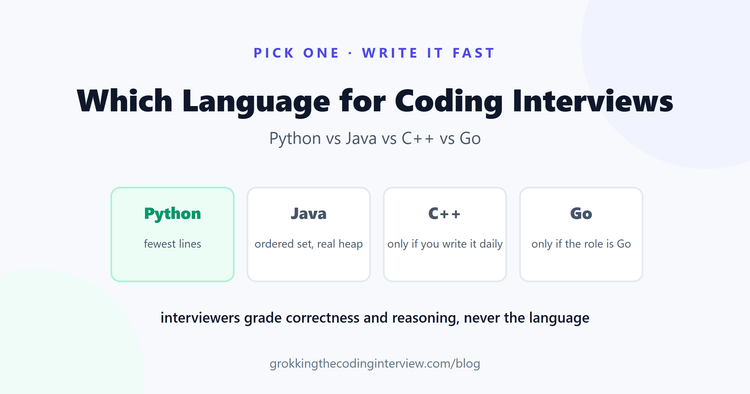
Which Language to Use for Coding Interviews: Python vs Java vs C++ vs Go
A practical comparison of Python, Java, C++, and Go for coding interviews, including where each one costs you time, which roles expect which language, and when switching is worth it.
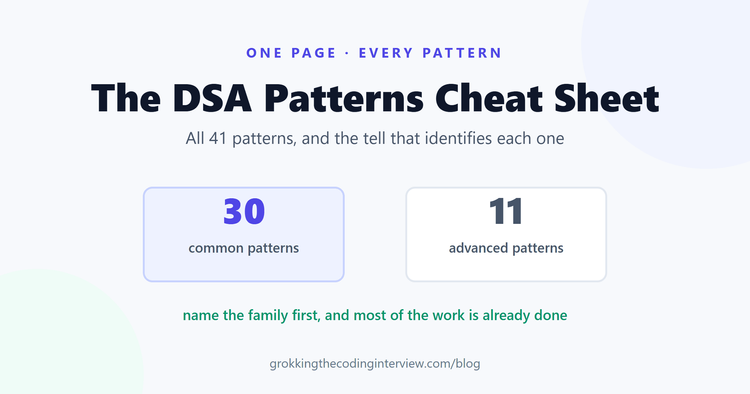
The DSA Patterns Cheat Sheet: All 41 on One Page
A printable cheat sheet of all 41 data structures and algorithms patterns for coding interviews, each with the tell that identifies it, the data structure it needs, and its complexity.

LeetCode vs Codeforces vs CodeChef vs HackerRank: Difficulty, Contest Format, and Which Employers Use Each
The four platforms compared in one table: difficulty, contest format, and which employers use each one. LeetCode for interview practice, HackerRank for online assessments, and why contest habits cost points in a live round.
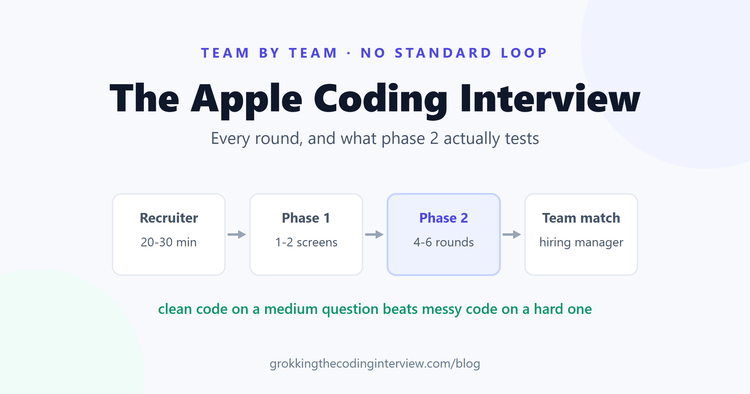
The Apple Coding Interview: Every Round, and What Phase 2 Actually Tests
A round by round guide to the Apple software engineer interview, what the phase 2 onsite actually tests, and how Apple grades code quality differently from Google and Meta.

Beyond Cracking the Coding Interview: An Honest Review of the Successor
A review of Beyond Cracking the Coding Interview: what the 644-page successor adds, where it beats the original, what a book still cannot do, and whether the classic is still worth reading.

NeetCode vs LeetCode: Price, Problem Count, Roadmap, and Video Coverage Side by Side
NeetCode and LeetCode compared on the four things that decide it: price, problem count, study order, and video coverage, in one table. Then the free setup that uses each for the job it does, and the one time paying makes sense.